
Blog posts

Pumping and Milk Storage
Table of Contents for all blog posts
Page updated October 2026
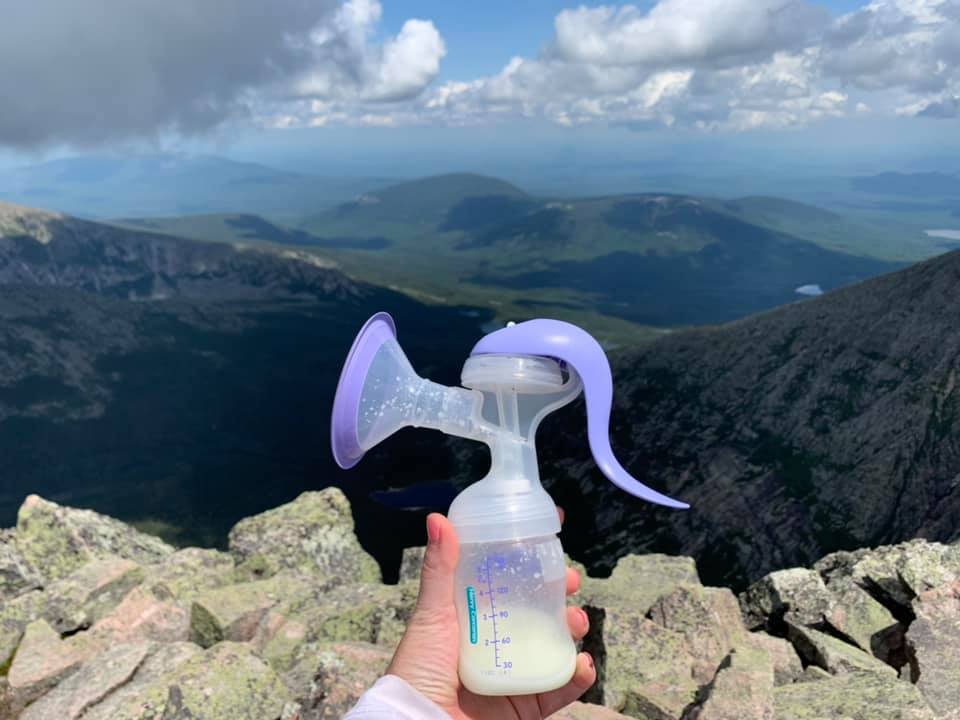
This amazing mom pumped while hiking in Maine for 3 days to keep up her supply.
Thank you so much @straightfromthetap_milklady for your adventurous spirit and sharing this beautiful photo!
Pumping is breastfeeding!
and incredibly helpful
for any breastfeeding family
Exclusive pumping
For when the lactating parent is away from the baby
If there are latch difficulties
To relieve overly fully breasts
To boost supply
And many more reasons.
Pumping effectively and comfortably
Not all pumps are alike - too many are poorly made. Work with your IBCLC to select the highest quality pump for your situation.
Research shows that a flange matching the diameter of the tip of your nipple is often best. But it’s not enough to just measure - you deserve a custom fit! Most pumps are still sold with flanges that are too large for pretty much everyone. My patient average is 13 - 15 mm (of course I also see smaller/larger), but I have not sized a single person to 24 mm in 6 years!
A custom fit takes into account not only the size of the flange, but also the shape of the flange. There are many shapes on the market now - here are some examples of hard flanges.
A custom fit is done while you are actively pumping so you can feel and see the results.
Pumping should be comfortable and produce milk in a timely manner. Do not accept pain, mild discomfort, or sessions that are overly long (typically 15 min or less should be achievable).
Pump settings matter! Most people do well with a few minutes of stimulation (faster cycling/lighter vacuum (as an example, for the Spectra this would be 70 cycles at vacuum 4-5); and then the rest of the session in expression (moderate cycling/higher vacuum - as an example for the Spectra this would be 50-54 cycles at vacuum 7-9). Of course there are variations from these recommendations, so I always advise people to play with settings to find what’s right for them.
There are also many silicone inserts and flanges on the market as well - in my practice I find that a well-fit hard flange will usually outperform a silicone flange or insert, but I do have them in my toolkit for those people that do better with them!
A manual pump (with a correctly fitted flange) can be an amazing pump for many people - sometimes for their portability, and other times people just prefer them over an electric pump.
Portable/wearable pumps are convenient but are not always effective enough for full-time use. Wearable pumps also need to be fitted with silicone inserts (related to flange fitting above). I’m certainly not saying to avoid wearable pumps, though - some people do very well with them (part-time or full-time) so - again - work with your IBCLC to figure this out.
Related to wearable pumps, are wearable flange cups that work with a stand-alone (separate) pump. As with wearable pumps they need the correct fit and may or may not work as well for each person.
Have a flange fitting with a knowledgeable IBCLC to customize your size/shape, pump settings and more
Flange “FITS” guide by Babies in Common
Babies in Common Directory of IBCLCs all over the world
How often to pump depends on your situation
For exclusive pumping, start with double pumping 8x/day to bring in a full supply. I recommend short sessions (~15 min, but times can vary up/down). This signals to your body that the baby is drinking milk frequently. Based on how things are going, you can adjust things up or down.
If a baby is nursing part-time, or nursing full time but ineffectively (not taking in full feedings) - then it’s important to start pumping to support your supply and the baby’s intake. But, it’s equally important to work with your IBCLC to figure out the right amount of pumping for your situation. I aim for enough pumping to keep you within your lactation goals, but not so much to overwork/overwhelm.
Power Pumping is sometimes helpful, but in my experience is not needed as often (or ever) once flange fit is customized.
If your baby is nursing well (comfortable for you, baby getting the right amount of milk) and your supply is meeting baby’s needs, there is no reason to pump on top of feeding unless you want to skip a feeding or make a bit of extra to save milk for a future need. Pumping too much on top of effective breastfeeding can lead to oversupply, which can be uncomfortable for your breasts and your freezer space! As above, I aim for enough pumping to keep you within your lactation goals, but not so much to overwork/overwhelm (and certainly not so much to cause engorgement or mastitis!)
Make a plan with your IBCLC to keep your breasts healthy, support your milk supply, and your infant’s needs.
A few more resources related to pumping/milk expression
Hands-on pumping - massaging your breasts can be very helpful while pumping (although I find with proper flange fit it’s often not needed, or needed less often. Hand Expression is shown as part of that video from Stanford Medical, but for much more information see my hand expression page.
Lubrication of the nipple sometimes helps with flange fit and comfort.
Non-lanolin nipple balms, organic olive oil or coconut oil are all good option - lanolin is too sticky for this purpose (and was named the 2023 allergen of the year).
Check ingredients and consider your own family history of allergy.
Also compare pumping with and without lubrication - sometimes it’s not needed and sometimes it actually makes things worse!
Soft Silicone Milk Extractors (most common brand is Haaka, so much so that it’s become a verb, but there are many other brands on the market) can be helpful but sometimes cause too much swelling of the nipple/areola, or overstimulate supply. Use these caution and talk to your IBCLC to customize their use for your situation (or even decide if they should be avoided). In the meanwhile here’s an Instagram post showing how to place them for better comfort and milk removal.
There are also passive milk collectors. These are placed in your bra to collect leaking milk with no vacuum - I prefer these because you may as well catch the milk if you are already leaking, and they don’t cause swelling of the nipple/areola.
A nursing/pumping bra is very helpful! They hold the flanges for you, and can be worn all day. There are also dedicated pumping-only bras, but most people find them not comfortable enough to wear all day so they wind up having to change into them for each pumping session (which adds work/time).
Pumping bra hacks:
A sports bra, or any stretchy bra or camisole that has enough flexibility to pull the cup to the side to hold the flanges.
Ponytail holder trick for holding flanges - works with most bras or camisoles
These bra extenders
Homemade - cut a small hole in a bra you like, use a pad to cover the hole
Milk Storage
CDC guidelines (updated Jan 2020)
Articles written before the CDC updated their guidelines - included here because the overall info is helpful, but defer to the CDC info above for correct timing of storage.
Nancy Mohrbacher “Why Milk Storage Guidelines Differ”
The Milk Meg “Keep on Pumpin’, Breastmilk Storage Guidelines”
“Refrigerator hack” - not endorsed by the CDC because there are too many steps where contamination could occur - but commonly used since basic storage rules indicate milk is safe at room temperature for 4 hours, in a cooler with ice-packs for 24 hours or a refrigerator for up to 4 days. The basic method (more info in the link) is to store the milk in a cooler with ice-packs or refrigerator, and to put the other parts (flanges, valves, etc) in a clean storage bag with a good seal. Keep those parts in a cooler with ice-packs or refrigerator between pumps. Then use them for your next pump. Repeat and then wash everything thoroughly when you get home. Again - not formally endorsed, so always evaluate your situation for cleanliness, and smell/taste the milk to check!
Sterilization of bottles and pump parts is not necessary for a full term healthy baby as long as parts are thoroughly cleaned. However feel free to sterilize if needed/desired!